

Ask a Bordeaux lover to name the first growths and they'll recite them like a nursery rhyme: Lafite, Latour, Margaux, Haut-Brion, Mouton. The 1855 Classification gave Bordeaux a fixed hierarchy of prestige, ranked château by château, and it has shaped how the world buys and talks about that region for well over a century.
Champagne never got one of those. And that absence is arguably the most interesting thing about the region today.
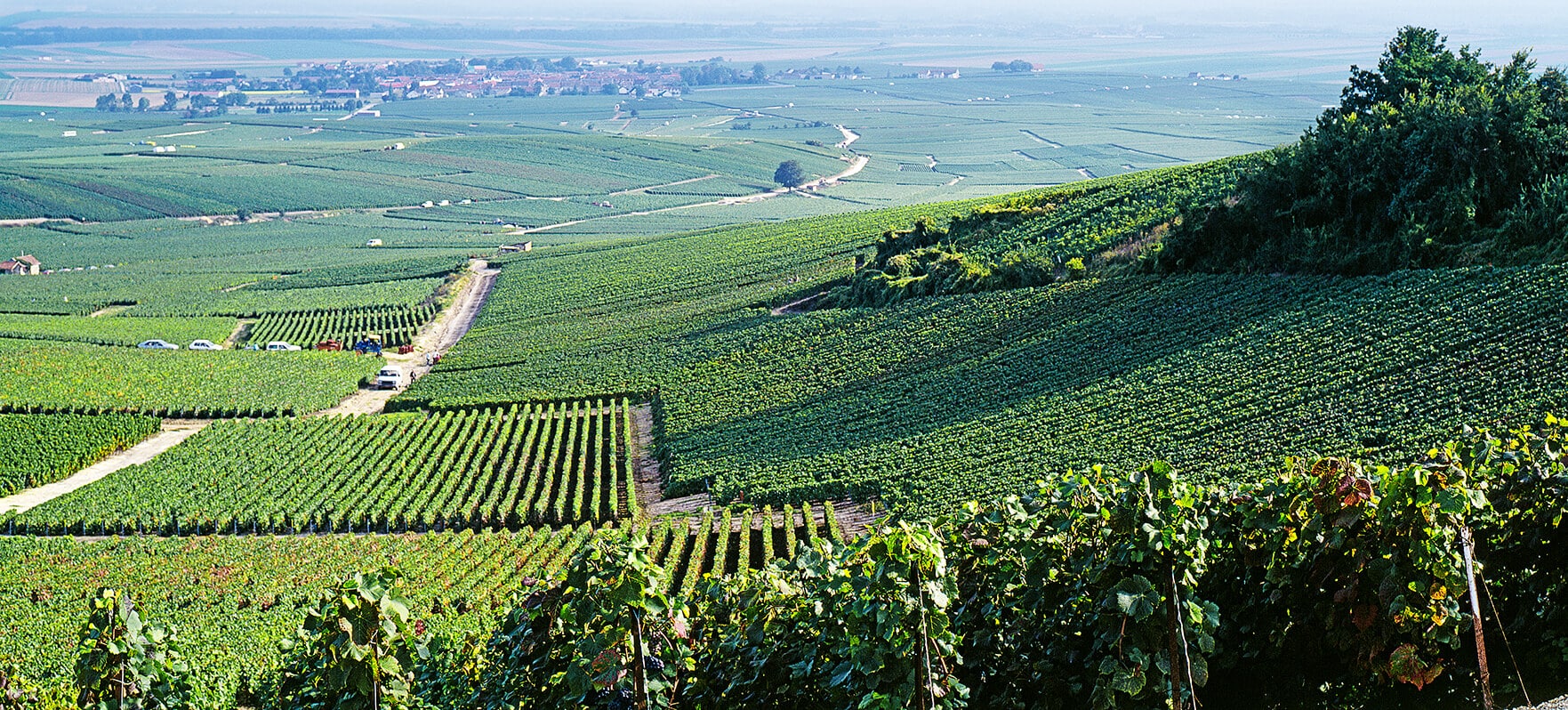
A Classification That Ranked Villages, Not Winemakers
Champagne does have a grading system - the Échelle des Crus - but it doesn't work the way Bordeaux's does. Rather than ranking individual producers, it ranks villages, on a percentage scale that historically determined what growers were paid for their grapes. Villages at 100% earned Grand Cru status; those at 90–99% became Premier Cru. There are 17 Grand Cru villages and around 42 Premier Cru villages out of Champagne's roughly 320 communes.
Crucially, this tells you almost nothing about who actually made the wine in your glass. A bottle labelled "Grand Cru" only guarantees that 100% of its fruit came from Grand Cru-rated villages - it says nothing about vine age, yield, whether the wine spent five years or five months on its lees, or whether the producer farms 200 hectares bought in from hundreds of growers or half a hectare they've tended themselves for forty years. Two Grand Cru bottlings can be worlds apart in quality and character, and the label alone won't tell you why.
For most of the twentieth century, that didn't matter much to consumers, because the Champagne market was built around brand, not producer. The grandes marques - Moët, Veuve Clicquot, Krug, Bollinger - bought grapes from thousands of small growers across the region, blended them into a consistent house style, and sold Champagne the way Coca-Cola sells a formula: the same taste, vintage after vintage, regardless of which village or vineyard the juice actually came from.
The Quiet Rebellion of the Récoltant-Manipulant
Buried in that system, though, was a legal category that would eventually upend it: the récoltant-manipulant, or "RM" - a grower who farms their own vines and makes, ages and bottles their own Champagne, rather than selling grapes on to a négociant house. On a bottle's tiny alcohol-tax registration code, RM distinguishes a grower-producer from an NM (négociant-manipulant, a house that buys in fruit).
For decades, RM Champagne was the region's quiet, undervalued corner - small production, little marketing budget, sold mostly to local restaurants and villagers. Then, starting in the 1980s and accelerating through the 1990s and 2000s, a handful of growers began doing something the grandes marques structurally couldn't: making Champagne as a true expression of one place, one set of old vines, one philosophy - vintage after vintage, without blending toward a house-wide average.
Figures like Anselme Selosse in Avize, and later Francis Egly in Ambonnay, became the reference points for what this could mean. Egly-Ouriet, in particular, is often cited as the clearest proof of concept: working almost entirely with old-vine Pinot Noir from the Grand Cru village of Ambonnay, farming organically and biodynamically, fermenting in barrel, and - most unusually for Champagne - ageing many cuvées for six, seven, even eight years on the lees before release, well beyond the regulatory minimums. The results don't taste like conventional Champagne so much as they taste like wine, in the way a serious white or red Burgundy does. It's not an accident that the wine writer Peter Liem has called Egly-Ouriet the house that most earns the description "Burgundy with bubbles."

Grower Champagne as Its Own Unofficial First-Growth System
What's emerged since is, in effect, an unofficial classification — built not by government decree but by critics, sommeliers and collectors voting with their attention and their wallets. A small circle of grower-producers - Egly-Ouriet, Jacques Selosse, Jérôme Prévost, Cédric Bouchard, Vouette et Sorbée, Georges Laval, among others - now command prices, allocations and critical scores that rival or exceed the grandes marques' prestige cuvées, despite most of them farming just a handful of hectares.
It's a genuinely different kind of hierarchy than Bordeaux's. Bordeaux's classification is a fixed historical artifact - Mouton Rothschild's 1973 promotion to first-growth status remains the only change in 170 years. Grower Champagne's informal pecking order, by contrast, is still being written in real time, vintage by vintage, disgorgement by disgorgement, based on what's actually in the bottle rather than a ranking frozen in the nineteenth century.
There's also something almost old-fashioned about what these growers are doing, even though the "movement" feels modern. Before large houses industrialised Champagne production in the 19th and 20th centuries, this - small farmers making wine from their own land - was simply how Champagne was made. The RM revival isn't really an innovation. It's a return.
Why It Matters for Anyone Building a Cellar
For collectors, the practical implication is this: in Champagne, more than almost any other fine wine region, producer matters more than appellation. A Grand Cru label tells you the postcode; it doesn't tell you the philosophy. Knowing whether a wine spent 48 months or 84 months on lees, whether it was barrel-fermented, whether the vines are 15 years old or 70, whether the producer farms organically - these are the details that actually separate a pleasant aperitif from a wine capable of the kind of ageing and complexity people associate with great still wine.
Grower Champagne rewards exactly the kind of attention Burgundy collectors already pay to a specific grower's parcel in Vosne-Romanée. There's no shortcut classification to lean on - no list of five names to memorise. But that's precisely what makes exploring it so rewarding: the hierarchy is built from tasting, not from a document signed in 1855.
Curious where to start? Look for old-vine Grand Cru fruit, extended lees ageing well past the legal minimum, and producers who farm their own vines rather than buying in grapes - the same instincts that built Bordeaux's first growths, just applied by hand, one small parcel at a time.